
Updated November 2026
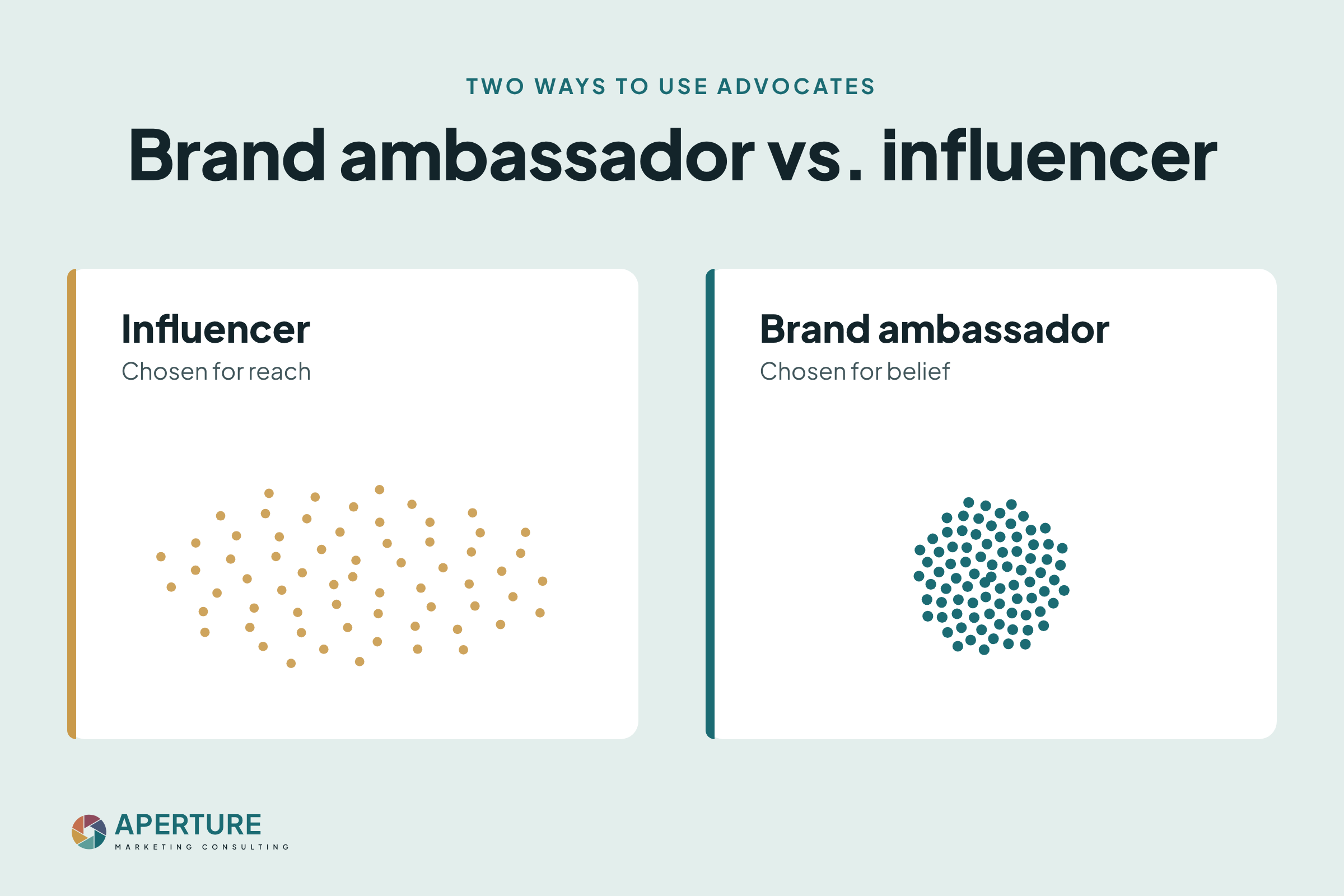
The two terms get used as if they mean the same thing, and the pages that explain them often disagree. The practical difference is simple. You hire an influencer for their audience. You build a relationship with an ambassador because they already believe in your brand.
This guide explains how the two differ, when each one makes sense, and how to start a brand ambassador program by finding the customers who are already your most committed fans.
The short answer
An influencer is chosen for reach. They have an audience you want to get in front of. The work is usually a campaign or a set of posts, paid by fee or product, and it ends when the campaign does.
An ambassador is chosen for their connection to the brand. They use it, believe in it and talk about it over time. The relationship is ongoing, often rewarded with product, perks or commission, and their audience can be small.
Picture a fitness creator with two million followers who posts about your protein bar for a fee and then moves on to the next sponsor. That’s an influencer. Now picture a customer who has bought the bar every week for three years, wears your gear and answers questions from newcomers in your community. That’s an ambassador, even with 800 followers. Her recommendation carries weight because nobody had to hire her to give it.
How they differ
What you’re buying. With an influencer, you’re buying attention: reach, awareness and a quick way to introduce a product to a new audience. With an ambassador, you’re building trust: someone people believe because they’ve seen them care about the brand over time.
How long it lasts. Influencer work tends to be tied to a campaign or a launch window. Ambassador relationships are meant to continue.
How they’re rewarded. Influencers are commonly paid a fee or given product for specific deliverables. Ambassadors are more often rewarded with product, early access, perks, commission or recognition, though some programs pay as well.
How much they know the brand. An influencer may be new to your brand and learn it for the campaign. An ambassador usually knows it well, because they were a customer first.
How much control you have. You can brief an influencer on a deliverable. An ambassador’s value comes from their own voice, so heavy scripting undermines the point.
When to use an influencer
You’re launching something and need to reach new people quickly.
You want to test a message or product with a particular audience.
You have a defined campaign window and budget.
When to use an ambassador
You want advocacy that builds over time and not a burst of attention.
You have customers who already talk about the brand without being asked.
You want to give your most committed customers a role, and learn from them.
They overlap in practice
Some influencers turn into long-term ambassadors, and some ambassador programs pay creators. The labels matter less than the question underneath: are you renting someone’s audience, or building a relationship with someone who already believes in what you do? Be clear with yourself about which one you’re doing, because the goals, the measures and the way you work with the person are different.
Start with your loyalists
The best ambassadors tend to come from your most committed customers, so the first step is finding them. Frequency of purchase alone doesn’t tell you, because two heavy buyers can feel very differently about a brand.
On one of the world’s most iconic entertainment franchises, attitude questions in the brand tracker split the superfans into two groups. Entertainment enthusiasts consumed a lot across many franchises, and this one was just one of them. Identity-driven franchise loyalists had a deeper connection tied to who they are. They wore the apparel, were more likely to dress up as the characters, and were strongly aligned with the values of the stories.
The enthusiasts look more like influencers or casual promoters: they have energy and reach, but the brand isn’t central to them. The loyalists are the natural ambassadors, because for them the brand is part of how they see themselves. To find your own, read Attitudinal Segmentation: Finding Your Real Fans, and add the question “to what extent would you miss this brand if it went away tomorrow?” to your tracker, which is covered in Brand Tracking Study: What to Measure and How to Use It.
How to start a brand ambassador program
Decide what the program is for. Advocacy, product feedback, content, community or sales. A program that tries to do everything ends up doing nothing well.
Find your loyalists. Use your own data: customers who buy repeatedly, who leave strong reviews, who already post about you, and who score high on attachment and identity questions.
Invite them, and be selective. An invitation signals that the brand sees them. A public application gets you people who want perks, not people who love the brand.
Decide what they get. Product, early access, a direct line to the team, recognition, commission. Choose rewards that fit the people you invited.
Give them guardrails, not scripts. Share the story and the facts. Let them use their own words.
Disclose the relationship. If an ambassador receives product, pay or other benefits, the connection should be disclosed when they post. Check the current FTC guidance for your situation.
Listen to them. Treat ambassadors as a source of insight. They’ll tell you what the brand means to people long before a survey does.
Common mistakes
Choosing by follower count. Reach is an influencer measure. For an ambassador, belief matters more.
Opening the program to anyone. Selectivity is part of the value.
Over-scripting. If every post sounds like your brand guidelines, people can tell.
Treating perks as the whole program. Recognition and access often matter more than discounts.
Starting before you know who your loyalists are. Find them first.
Having no point of view on what happens if they criticize you. Real advocates sometimes disagree. Decide in advance how you’ll respond.
When to run it yourself and when to get help
A small program can be run in-house with the steps above. Outside help pays off when you need to find out who your real loyalists are, design the program around the brand’s story, and connect it to the rest of the customer journey. That’s the work I do in Grow, my customer lifecycle service, covering loyalty, advocacy and fandom strategy.
If you’d like to talk through whether an ambassador program fits your brand, book a 30-minute consultation.
Frequently asked questions
What’s the difference between a brand ambassador and an influencer? An influencer is chosen for the size and reach of their audience and usually works on a campaign. A brand ambassador is chosen for their connection to the brand and represents it over time.
Can an influencer be a brand ambassador? Yes. Some influencers become long-term ambassadors once they have a real relationship with the brand. What separates them is the depth and length of the relationship, not the follower count.
Do brand ambassadors get paid? Sometimes. Rewards are often product, early access, perks, recognition or commission, and some programs pay a fee. Whatever you offer, the relationship should be disclosed when they post about the brand.
How do I find brand ambassadors? Start with your own customers: repeat buyers, people who already talk about the brand, and those who show strong attachment in your research. Invite them instead of opening a public application.
Do I need a brand ambassador program if I already work with influencers? They do different jobs. Influencers extend your reach, and ambassadors build trust and loyalty. Many brands use both.