
What Miranda Priestly Knows That AI Doesn't
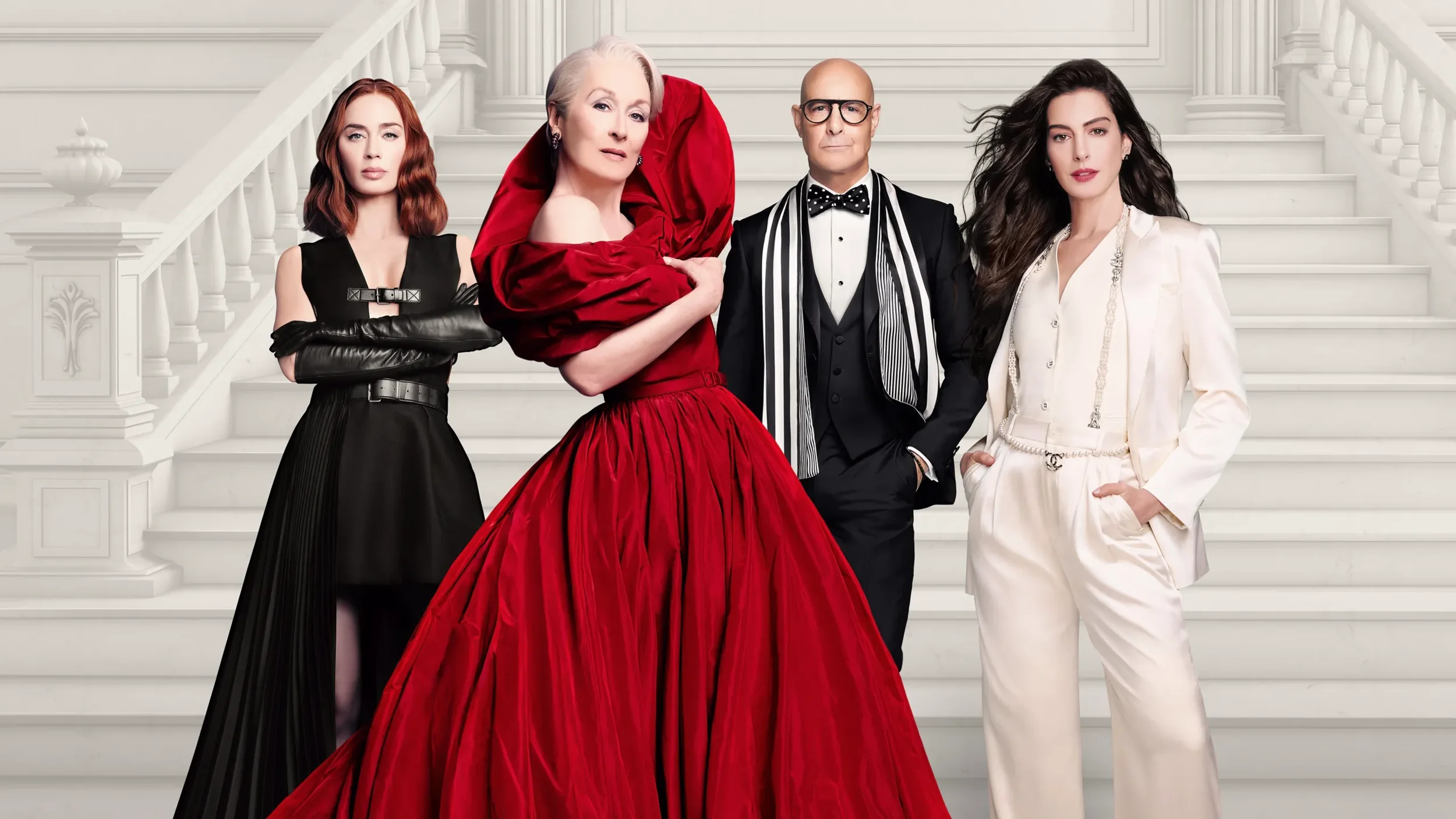
I saw The Devil Wears Prada 2 recently, and I've been thinking about it ever since — not as a movie fan, but as a marketer.
Because here's what struck me: this film is a masterclass in brand management. It stayed perfectly true to the original while giving itself its own reason for being. The characters gave us exactly what we wanted from them. There were subtle nods and easter eggs for fans of the first film. But the story stood on its own — and by the end, you found yourself liking every character even more than before. Even Miranda.
That's not easy. Sequels fail constantly because they either try too hard to recreate the original or drift so far from it that they lose what made it special. This one found the balance. Someone made smart, confident choices about what to keep, what to evolve, and what to leave behind.
That someone had taste.
I spent most of last week reviewing brand campaign pitches, which put me in a particular headspace going into the theater. And what I kept noticing — in both experiences — is how rare real creative judgment is.
In my experience, agencies tend to fall into two camps when they respond to a brief. The first camp checks boxes. They read what you asked for, deliver against each point, and hand you something that is technically correct and almost entirely forgettable. The second camp does something different. They use the brief as a starting point, then formulate a unique perspective — a point of view that's genuinely theirs, that you didn't ask for explicitly but immediately recognize as right. Those agencies almost always nail the human insight underneath the ask. And human insight is what separates powerful creative from competent creative.
This is exactly where AI gets complicated.
AI in advertising is already everywhere: drafting copy, generating image and video variations, analyzing audiences and testing creative at a scale no team could manage by hand. AI is genuinely useful in creative work. It accelerates research. It generates starting points. It helps teams move faster and explore more territory. I'm not dismissing any of that.
But AI is very good at producing the first kind of agency work — the box-checking kind. Give it a brief and it will give you something on-brief. Structured. Defensible. Competent. What it cannot do is step back from the brief and say: here's what this brand actually needs to say, and here's the one human truth that makes people feel something.
That requires taste. And taste is not something you can prompt your way into.
Taste is the ability to recognize when something is true — not just strategically sound, but true. A real observation about human behavior that most brands have walked past a hundred times without stopping. A creative choice that doesn't follow the category playbook because it doesn't need to. A decision that feels right before you can fully explain why.
The brands and agencies I've admired most over the years all have this quality. They don't just respond to culture — they have a perspective on it. They know what they stand for clearly enough that they also know what they'll never do. That clarity is a form of taste, and it can't be generated. It has to be developed.
So where does that leave us?
I think AI raises the floor on creative work. Competent is easier to achieve than ever before. But when competent becomes the baseline for everyone — when every brand has access to the same tools producing the same caliber of output — competent stops being an advantage. The advantage goes to whoever can still do what AI cannot: find the insight that opens the door, and trust it.
Miranda Priestly built her entire authority on exactly that. Not on producing more than anyone else. On seeing what others missed, and having the confidence to act on it.
That part of the job still belongs to us.